Mardi Gras Embroidery PNG Design Review
As a professional embroidery digitizer and product reviewer, I approach every new asset with a critical eye. When evaluating the Mardi Gras Embroidery PNG Design, my first thought is not just about the festive aesthetic, but about how this graphic translates from screen to stitch. While the product description identifies this as a sublimation design intended for heat transfer, experienced makers know that high-quality graphics often serve as the foundational blueprint for creating stunning machine embroidery designs. For Etsy sellers, apparel decorators, and craft business owners, understanding the dual nature of this file is essential for maximizing its value in both digital and physical product lines.
Visual Personality and First Impressions
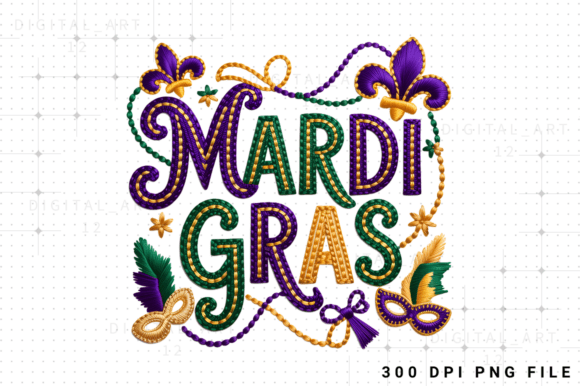
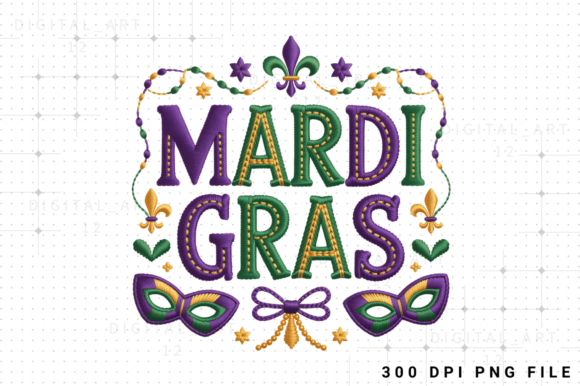
The immediate mood of this Mardi Gras Embroidery PNG Design is celebratory yet structured. Unlike generic clip art that can feel flat or chaotic, this graphic possesses a visual weight that suggests it was created with production in mind. The layout balances traditional carnival motifs—masks, beads, and fleur-de-lis elements—with clean lines that are crucial for reproduction. As a designer, I look for clarity in the negative space. If a design is too cluttered, it becomes a muddy mess when converted to satin stitch or fill stitch areas. This artwork maintains distinct separation between elements, which gives me confidence that it would digitize cleanly or serve as a vibrant sublimation layer beneath embroidered accents.
For those focusing on T-Shirt Designs and Graphics, the color palette appears optimized for high-contrast output. The traditional purple, green, and gold are rendered with enough saturation to pop against white polyester for sublimation, yet they possess enough tonal variation to guide thread selection if you choose to recreate the motif as a custom embroidery project. This versatility makes it a strong candidate for mixed-media applications, where the background is sublimated and key details are highlighted with texture.
Real-World Application: The Custom Sweatshirt Test
To truly judge the utility of this asset, I mentally placed it into a real-life production scenario: creating a premium unisex sweatshirt for a boutique holiday collection. In this case, I am considering using the Mardi Gras Embroidery PNG Design as a sublimated base on a poly-blend fleece, potentially adding an embroidered patch or direct stitching over specific focal points.
In a sweatshirt embroidery context, fabric texture is everything. Fleece has a pile that can swallow fine details. Because this PNG offers bold, readable shapes, it survives the translation to textured fabrics better than intricate line art would. If I were selling this finished product, the crispness of the graphic ensures the design remains legible from a distance, which is vital for craft fair sales and social media marketing. For a personalized gift, such as a family reunion shirt or a parade-day outfit, the design’s scalability allows it to function as a large center chest piece or a smaller pocket-sized accent without losing its identity. This adaptability directly impacts perceived product value and customer trust; buyers can see that the artwork isn't pixelated or stretched, signaling professional quality.
Navigating Fabric Limitations and Technical Constraints
While the design is versatile, practical judgment requires acknowledging where it demands caution. As a sublimation-first asset, users must remember that true sublimation requires polyester or poly-coated substrates. If you attempt to use this strictly as a heat transfer on 100% cotton tote bags or dark fabrics without a white vinyl carrier sheet, the results will be disappointing. For embroidery professionals looking to adapt this into a pure stitch file, be mindful of stitch density.
If converting this graphic into an applique design or dense fill areas, test on scrap fabric first. Large solid areas of color in the original PNG might translate to excessive stitch counts if not managed correctly in your digitizing software. On stretchy knits or performance wear, heavy ink coverage combined with dense embroidery can cause puckering or fabric distortion. Always pair this design with appropriate stabilizer; a cut-away backing is non-negotiable for knit apparel to maintain registration. Additionally, while the design works beautifully for commercial embroidery projects on light garments, verify how the colors interact with dark backgrounds. Sublimation dyes are transparent, meaning this specific file is likely best suited for white or light-colored bases unless you are employing hybrid techniques.
Strategic Value for Makers and Digital Sellers
For creative entrepreneurs, this Mardi Gras Embroidery PNG Design represents more than just a seasonal decoration; it is a scalable business asset. Its clean composition makes it ideal for printable mockups, allowing you to showcase potential products without stitching every variation. This efficiency is crucial for Etsy sellers testing market demand before committing to inventory. Furthermore, because it bridges the gap between sublimation and embroidery aesthetics, it appeals to a broader customer base. A buyer might want a lightweight sublimated tee for a hot parade day, while another prefers the tactile luxury of an embroidered patch on a denim jacket. Having a source file that supports both workflows increases your shop's reach.
Brand consistency is another hidden benefit. Using a cohesive graphic style across different mediums—from nursery decor and baby embroidery items to adult custom apparel—creates a recognizable signature for your handmade product line. When customers associate your brand with high-clarity, well-executed festive gear, they are more likely to return for other holidays. Just ensure you confirm licensing terms before selling finished items or incorporating the file into digital product bundles, as commercial rights vary by creator.
Designer Notes for Successful Execution
Before launching this design into production, adhere to these practical checkpoints to ensure professional results:
- Verify File Specifications: Since exact dimensions and resolution are not listed here, open the file to confirm it meets 300 DPI standards for sublimation or provides sufficient detail for tracing in embroidery software.
- Test Color Contrast: View the design in black and white before printing or digitizing. If the values blend together, adjust contrast to ensure distinct separation in the final product.
- Stabilizer Selection: Match your stabilizer weight to the fabric. Use tear-away for stable wovens like tea towels or pillow covers, and cut-away for stretchy sweatshirt embroidery.
- Mockup Validation: Create digital previews on both light and dark garments to visualize opacity issues inherent to sublimation files.
- Wash Testing: If producing items requiring frequent washing, such as baby clothes or kitchen towels, run a wash test to ensure the dye migration or stitch integrity holds up over time.
- Licensing Check: Explicitly review whether the license permits commercial use for physical products versus digital redistribution to avoid legal pitfalls.
Ultimately, the Mardi Gras Embroidery PNG Design is a robust starting point for makers who understand their tools. Whether utilized as a standalone sublimation print or reimagined as a complex machine embroidery design, its success depends on respecting the technical requirements of your chosen medium. By approaching this graphic with a producer’s mindset rather than a consumer’s, you elevate your craft business offerings and deliver finished products that stand out in a crowded marketplace.